

Thoughts from Diamond Mind

Welcome to the Diamond Mind weblog. For a while, we've been looking for the best way to publish small pieces of baseball commentary and research, items that may not warrant a full article (such as the ones we've been writing for ESPN.com since 1998) or items that would be outdated by the time our next email newsletter is due to be issued. A weblog seems perfectly suited to this purpose, and we hope you enjoy what you read here.

To provide feedback, email us at blog@diamond-mind.com. We won't be able to reply to those messages individually, but we'll read them all, and we may respond by posting a reply in the weblog itself.


Blog Archives

Weblog Home

This page is powered by Blogger.

Saturday, May 24, 2003

White Sox fire hitting coach Gary Ward
 
I've probably written more than you want to read about team efficiency lately, but the recent dismissal of Gary Ward as White Sox hitting coach immediately brought this to mind again.

As I wrote in my Team Efficiency article last December, one way to measure the efficiency of an offense is to divide runs scored by the total bases and walks (TBW) it produced. This ratio, which I've been calling run efficiency average (REA), isn't as precise as linear weights or runs created, but it has three things going for it: (a) it's easy to figure using widely-available stats, (b) it produces intuitive numbers that are very similar to team batting averages, and (c) history tells us that extreme values are rarely repeated, so it does a good job of pointing out teams that are likely to be better or worse in the future.

From 1993 to 1997, the White Sox offensive REAs were right around the league average. In 1998, they were 11 points better than the league, but in 1999, they were nine points worse. That makes seven years of near-league-average performance.

In 2000, however, everything clicked. The offense was very good to begin with, finishing fourth in the league in TBW, but it was also unbelievably efficient. It seemed that anytime the Sox needed a big hit, they got it. As a result, they led the AL in runs and posted the highest REA of any team in the past thirty years, with the exception of two Colorado teams that had a lot of help from their home park.

As I noted above, extreme values of REA rarely repeat, and there was no reason to believe things would go as well for the 2001 White Sox as they did in 2000. And they didn't. They got off to a slow start and were a few points below the league average in REA by the end of the year. That slow start cost the hitting coach, Von Joshua, his job. And gave Gary Ward a chance.

The 2002 White Sox had another good year in terms of REA, finishing 13 points above the league average. That made Ward look good. This year, however, Chicago was 10th in the AL in TBW and 12th in runs as of May 18th. Their REA was 30 points below the league average. And that may have cost Ward his job.

I'm not qualified to judge whether Joshua or Ward were good coaches, but I'm willing to go out on a limb and say these things:

1. I doubt that Joshua was responsible for the strong showing in 2000, and I don't hold him responsible for failing to achieve that again in 2001.

2. It's possible that Joshua was the victim of unrealistic expectations related to an unusually efficient 2000 offense.

3. At the time Ward was fired, the White Sox had just completed a stretch in which they played 18 of 21 games against three teams (Oakland, Seattle, and Minnesota) that ranked in the top four in the AL in fewest runs allowed. Those high rankings were due in small part to their recent success against the White Sox, but only in small part.

4. It wouldn't surprise me if the White Sox make a significant move toward the norm in REA during the remainder of this season. In fact, I'd be surprised if their REA doesn't substantially improve. And I'd be surprised if guys like Konerko and Crede don't start hitting, because they have good track records.

5. If these things happen, Walker will get a lot of credit, even though it's reasonable to expect improvement no matter who's in that job.

I'm not saying we can judge batting coaches by looking at stats like TBW or REA. Coaching is all about getting the most out of the talent you have to work with, but judging talent is a highly subjective exercise, so it's hard to know whether the coach is getting the most he can get. Walker may be an improvement over Ward, and Ward may have been an improvement over Joshua. I don't know. In fact, I'd say it's impossible to make those judgments from our vantage point as outsiders. My hunch is that baseball coaches matter, but they matter a lot less than baseball players.

I am fairly sure that at least some of these coaching changes are driven by marketing objectives: "Folks, we're not playing well but we'll get better if we just make a change to our coaching staff, so keep buying those tickets, and keep showing up to use those tickets you've already bought, because we could really use the concession revenue." That may not be fair, but it may be good business.

posted by Tom at 11:11 AM


Thursday, May 22, 2003

The importance of relief pitching, cont'd
 
In my recent article about the consistency and importance of bullpens, I pointed out that there's not much difference between the playoff teams in terms of their league rankings in offense, starting pitching, and relief pitching. The implication was that relief pitching may have become as important as the other two elements of the game even though pitching is only half the game and relievers account for only one-third of all innings.

Even since that article was posted, I've been thinking that more needed to be said about other possible interpretations of the data, and several astute readers have written with pertinent comments in that regard.

The common thread in my thoughts and those reader comments is the need to refrain from assuming that correlation means causation. In this case, high bullpen rankings and postseason play were highly correlated, but we need to be careful about claiming that teams made the playoffs and had success in the playoffs because their bullpens ranked very high.

Let's consider some other possibilities.

First, it's a very small sample, only five years, so these results may not be typical.

Second, my analysis was based on simple rankings. If, however, the spread in OPS between the top and bottom teams was much greater for bullpens than for offenses, we're not comparing apples to apples. A first-place ranking in bullpen OPS might represent a more significant advantage over the league than a first-place ranking in offensive OPS.

Though I didn't write about it, I did look at these spreads before publishing the article. They were the same for starting pitching and relief pitching, and only a little smaller for offenses, so I don't think this was a major factor.

Third, it's possible that some teams are successful in more than one area of the game. Perhaps they have very good starting pitchers and can spare some quality arms for bullpen work. Perhaps they have the financial resources to buy talent of all types or the management skill to develop talent in all three areas. If there's a strong link between high-ranking bullpens and high-ranking offenses/rotations, it might be the offenses/rotations that are keying their success, with the bullpens just along for the ride.

Let's take a look at a few examples to see if we can shed any light on this third possibility, focusing on the AL, mainly because I don't have time right now to do both leagues. (As was the case with the original article, all rankings are based on OPS.)

In 1998, the Yankees were first in offense, first in starting pitching, and third in relief pitching. They notched 114 regular season wins and won the World Series, losing only two postseason games along the way. Their only serious competitor was the Red Sox, who were fourth in offense, third in starting pitching, and tops in relief OPS. The Boston bullpen advantage didn't amount to much, however, as they finished 22 games back of New York and lost the division series to Cleveland.

The next year was similar. New York was third in scoring, second in starting pitching, and first in relief pitching. This time, they lost only one postseason game, and their strong bullpen may have been the difference this time. Cleveland was first in offense and fourth in starting pitching, so the Yankees didn't have a significant edge in these areas. But the Indians were only seventh in relief pitching, and that bullpen was a major reason why the Indians lost the division series to Boston.

In 2000, the Yankees were second in the league in relief pitching, and that was enough to carry them to another World Series championship, even though they were only sixth in offense and fourth in starting pitching. The White Sox took the Central from Cleveland even though the Indians topped them in both offense and starting pitching. Two things put Chicago over the top -- a very efficient offense that outscored the Indians by 28 runs despite the deficit in OPS, and a stronger bullpen. In the West, Oakland and Seattle made the postseason despite finishing tenth and sixth in relief OPS, respectively. Overall, this was a mixed bag in terms of the importance of relief pitching.

In 2001, the Yankees were again carried into the World Series by their bullpen. (Ironically, they lost game seven when Mariano Rivera couldn't hold a ninth-inning lead.) The New York offense was only eighth and the starting pitchers only fourth. The Red Sox were better in both categories, but their bullpen fell to ninth in the league, and the team barely managed to top the .500 mark.

In the Central that year, Cleveland rebounded to win the division despite their weak starting rotation, which was tenth in the AL in OPS. The offense was second-best, however, and that, combined with a fourth-ranked bullpen, was enough to give them the division title. If you combine the offensive and starting pitching rankings, Chicago and Minnesota were right with Cleveland, but they couldn't match the Indians pen.

The West was clear cut. Both Seattle, which won 116 games, and Oakland, which also topped the century mark, were well-rounded teams that finished among the leaders in all three areas. Seattle didn't just lead the league in bullpen OPS, though. It dominated, posting a .611 figure that was by far the best since 1998 in either league, and that was a huge part of their success.

In 2002, all four playoff teams were in the league's top seven and Anaheim's league-leading pen was instrumental in their World Series run. On the other hand, Seattle was second in relief OPS and Chicago fourth, and both teams were on the outside looking in come October. Minnesota and Oakland were still playing despite finishing sixth and seventh, respectively, in bullpen OPS.

In the fifteen AL postseason series that have been played since 1998, the team with the higher-ranking offense (based on regular-season OPS) won only five times. The team with the higher-ranking starting pitchers won seven times. The team with the higher-ranking bullpen won twelve times. In four of those twelve series, the winning team was victorious even though their opponent was higher-ranked in both offense and starting pitching.

By reviewing these five years, I don't claim to have done a comprehensive analysis of the relative importance of offense, starting pitching, and relief pitching in today's game. These examples provide some evidence to support the idea that relief pitching is right up there in importance, but they provide some evidence to the contrary as well. I will say that relief pitching is more important than I thought before I began looking at these rankings.

If I was responsible for building a team, my priorities would be starting pitching, then offense, then relief pitching. That was true a month ago and it's true today. The difference is that I previously viewed relief pitching as a distant third on that list, with starting pitching only a hair more important than offense. Now I'd say that relief pitching is a very close third.

(By the way, I don't mean to ignore defense. It's a very important part of run prevention that affects the rankings for starting pitchers and bullpens. One cannot build an offense without thinking about the defense at the same time.)

posted by Tom at 11:50 PM


Tuesday, May 20, 2003

To bunt or not to bunt...
 
In the last two innings of Monday's game between the Giants and Diamondbacks, the sacrifice bunt played a major role in the outcome, for better or worse.

Leading by one in the bottom of the 8th, San Francisco handed the ball to Felix Rodriguez. He promptly walked the first two hitters, forcing Felipe Alou to summon his closer, Tim Worrell, with six outs to go. Bob Brenly ordered Rod Barajas to lay down a bunt. He did as asked, and after pinch hitter Mark Grace was intentionally walked, Tony Womack's ground ball brought home the tying run. Junior Spivey grounded out to end the inning, stranding two runners and leaving the game tied.

I liked Brenly's decision to bunt here. Barajas is a career .227 hitter and hasn't been swinging the bat well in recent days, so the swing-away option wasn't all that attractive. The first-and-second-with-nobody-out situation is the best bunt situation in the game. The bunt put the tying and winning runs in scoring position, and even though nobody else did much in the inning, moving the runners helped them tie the game.

In the top of the 9th, closer Matt Mantei gave up a leadoff single to J.T. Snow, bringing up Neifi Perez. Perez is one of the game's worst hitters, so the decision to bunt was pretty obvious here, too. Unfortunately for the Giants, Perez couldn't execute -- he bunted it hard and right at Mark Grace, who took it on one hop and fired to second for the out. A strikeout and a ground out later and the game was still tied going to the bottom of the ninth.

Worrell walked Luis Gonzalez to lead off the ninth, and Brenly again opted to bunt the runner over. Dave Dellucci's bunt was just as bad as Perez's, but he was saved when Snow's throw to second was high and wide for an error. With runners on first and second and nobody out, Brenly called for the bunt again, this time with Matt Williams at the plate. Williams bunted foul once, took two balls, and then popped up a bunt for an easy out. All of a sudden, Worrell was one pitch away from a double-play grounder that would get him out of the inning.

He didn't quite get it, though, as Alex Cintron hustled down the line and just beat out the relay throw. With two out and runners on second and third, Steve Finley was intentionally walked, and then Worrell walked Barajas to force in the winning run.

Would you have bunted with Williams in that situation? On the one hand, Williams is batting .226 this year. On the other hand, bunting gives you one less shot at a game-winning single, and Williams' last successful sacrifice was in 1990. I think I let him swing, but we'll never know how that would have turned out.

posted by Tom at 10:34 PM


Projection watch, National League, week 7
 
A quick rundown on how the NL teams have fared relative to our preseason projections, through the games of Sunday, May 18th ...

Braves -- Unquestionably, the biggest surprise of the season to date. Atlanta is 41 runs ahead of forecast offensively, and they're leading the league in scoring. The pitching is right in line with our preseason projections, but they've gotten an additional boost from being 5 wins ahead of their pythagorean mark. Add it all up and they're 8 wins above our projection already.

Expos -- Six games better than we projected, thanks to a pitching staff that has allowed 41 fewer runs and an offense that is 8 runs better. I doubt they can sustain this pace, however. Their defensive efficiency is second-best in the majors, and that's not likely to continue all year. Their TBW differential is only +25, and that's consistent with a record only a game or so over .500.

Phillies -- Essentially right on target, but sitting in third place only because they share a division with baseball's two biggest surprises. Philly has scored 11 fewer runs than expected, but their pitching has been 23 runs better. There's no reason for concern here unless the Braves continue to overachieve all season.

Marlins -- Two games below forecast so far, but that's largely due to a very tough schedule. Both their offense and defense are right on target despite the injuries and the high level of competition.

Mets -- A little worse than expected on both sides of the ball, but not by much. Overall, they're one win behind our forecast.

Cubs -- While the Braves are the biggest upside surprise in terms of wins, the Cubs have that honor in terms of run differential. They're 32 runs above forecast offensively and 19 runs better in pitching and defense, good for a favorable 51-run swing. Unfortunately for Cubs fans, they're -2 versus their pythagorean record, so they're a little less than four wins ahead of forecast overall. Their TBW differential of +153 is best in the NL by far, and second only to the Yankees in all of baseball.

Astros -- Right on target across the board.

Cardinals -- Statistically, they've been much better than the Astros, but the Cards are five full games behind their pythagorean projection. Nobody else in baseball is worst than minus-two. Both the offense (+26 runs) and pitching (-10) have been better than expected, but they've blown a lot of ninth-inning leads.

Reds -- The mirror image of the Cardinals ... terrible statistically but five wins better than their pythagorean record. The majors' most disappointing team in terms of runs allowed, with 56 more runs given up than projected. The offense has been a little better than expected, but not enough to make up for the pitching. Their TBW differential is -111, and that's the fifth-worst mark in the game.

Pirates -- The offense has been a little worse, the pitching a little better, but the team is within a game of where we expected them to be.

Brewers -- Slightly better than expected offensively, 21 runs worse defensively. Overall, they're between two and three games behind the pace they set in our simulations.

Giants -- Three games ahead of the pace we projected, but that's two less than it was a week ago. The offense and defense are almost exactly where they were in our simulations, so the three game advantage is entirely due to being above their pythagorean record.

Dodgers -- The offense was expected to be weak, but not this bad: they're 28 runs behind their projected pace. But that doesn't matter too much because their pitching has been exceptional, 53 runs better than expected, and good enough to lead the league by a very large margin. Their defensive run efficiency average is a stunning .215, and nobody since 1974 has ever been below .225, so this could prove difficult to sustain.

Rockies -- Two games below forecast because their pitchers have allowed 17 more runs than expected, but considering their tough schedule to date, this team is right on target. If they can survive the next two weeks, they could make a big move because of a very soft June schedule.

Diamondbacks -- Surprisingly good considering the injuries to Johnson, Schilling and Kim. The pitchers have allowed only 6 more runs than projected. The offense, at -17, is more responsible for their slow start.

Padres -- Seven wins below forecast, making them the biggest disappointment in baseball. The Tigers record is worse, of course, but less was expected of them. San Diego's pitching has been awful, 54 runs worse than expected. The offense is only 9 runs short of our projection. Their TBW differential of -173 is second-worst in the majors, and they're gaining fast on the Tigers in that category.

posted by Tom at 5:40 PM


Inside the boxscore
 
Baseball is a funny game. If the Red Sox and Yankees played last night's game 10 times, there would have been 10 completely different stories told in today's Boston and New York newspapers. But they only played once, and if you saw the boxscore, you probably concluded that Casey Fossum struggled through his six innings allowing five earned runs while David Wells scattered nine hits over his 6+ innings en route to his sixth win. That's close to the truth, but there's more to the story.

Soriano pulled Fossum's first pitch of the night between Garciaparra and a diving Mueller. Jeter popped the second pitch down the right field line and it caught some chalk and bounced into the stands for a ground rule double. Giambi followed with a relatively weak grounder to short, but no one was there because the Sox put on the Giambi shift. Four pitches, three perfectly placed balls by the Yankee hitters, and a two-run lead for the Bronx "Bombers."

The inning of inches continued when Williams hit a swinging bunt down the third base line that barely rolled foul. At that point I was shocked that the ball didn't just sit on the chalk, but Fossum finally got a break. After Williams flied out, Giambi took off for second and Matsui grounded a ball just out of the reach of Todd Walker's dive, executing the hit-and-run to perfection. Fossum started to look rattled as he walked Posada then gave up a base-clearing triple to Mondesi. Shiell started to warm in the bullpen and Fossum was probably one hit away from being pulled, but he battled back and got out of the inning.

In that first inning, Fossum faced 10 batters but really only pitched poorly to three of them (two walks and the Mondesi rocket). He'd go on to pitch five shutout innings allowing only one hit, no walks, and striking out three.

Wells had all the breaks in his favor. With one out in the bottom of the first and runners on first and third, Manny hit a grounder to second. Soriano tagged Nomar then threw wildly to first unable to complete the double play. But replays showed that he never tagged the runner. Nomar argued the call but he was still out and the Sox were out of a possible big inning.

Besides the missed call, Red Sox batters also hit several balls hard right at fielders, including a Millar liner at Wells' face that was caught in self-defense. And of the 9 hits allowed by Wells, 7 of them came after the first two batters of the inning were retired. You're not going to score many runs when you essentially start every inning with two outs.

It just wasn't Boston's night, but the good news for the Sox and their fans is that there are 18 more opportunities for the breaks to even out between these two teams.

posted by Zack at 11:14 AM


Monday, May 19, 2003

Projection watch, American League, week 7
 
A quick rundown on how the AL teams have fared relative to our preseason projections, through the games of Sunday, May 18th ...

Yankees -- Only 9-13 since an 18-3 start, the Yankees are about as close to our projection as you can get. They're down a little less than one win, up one run offensively, and down one run defensively. Statistically, still by far the best team in baseball, having generated 217 more total bases and walks (TBW) than they've allowed.

Red Sox -- Right on our projected winning percentage, but lucky to be there. The offense has been a little better than projected, but the pitching and defense have allowed 52 runs more, making them the third-most-disappointing team in terms of runs allowed.

Blue Jays -- Also right on our projected winning percentage, but have scored 40 more runs and allowed 29 more than forecast to this point.

Orioles -- Yet another team that is right on our projected winning percentage. The offense has been a little better (15 runs) than expected; the pitching is right on forecast.

Devil Rays -- Four wins ahead of forecast, but it's hard to say whether they'll be able to sustain this pace. Their run margin (-52) is fifth-worst in the majors, and their TBW differential (-161) is third-worst, ahead of only the Tigers and Padres.

Twins -- Like the Yankees, the Twins are very close to our forecast. They're up by a little more than one win, down four runs offensively, and 8 runs better in pitching and defense.

Royals -- Still six wins ahead of forecast, but starting to come back to earth. Three of those six wins can be attributed to pitching (27 fewer runs allowed), with the other three due to a +3 pythagorean mark. The offense is right on schedule.

White Sox -- Three wins below our projection, and it's all offense. At 49 runs below forecast, they field the second-most-disappointing offense in the majors. Only Detroit has been worse, relative to our preseason expectations. The pitching has been 12 runs better than expected.

Indians -- Ditto, except that Cleveland is five wins behind the pace they set in our simulations. The offense is down 45 runs, 20 of those runs due to lower TBW production, the other 25 due to inefficiency. Their offensive run efficiency average is only .235, 37 points below the league average, and only the Tigers are worse. The pitching is right on the mark.

Tigers -- Hanging in there despite a tough schedule. Detroit is currently five games below forecast, but that's one game better than two weeks ago. Everybody's talking about how bad their offense has been, and they are 55 runs below projection, but the pitching has been 40 runs better. We projected them to be 13th in runs allowed, but they're currently 7th.

Mariners -- Cruising right along, four wins ahead of forecast. Both the offense and the pitching have been a little better than expected.

Athletics -- Neck and neck with the Mariners in most respects, but trailing by two games in the standings because Seattle has matched its pythagorean record and Oakland is minus-two. The A's offense is 9 runs below forecast, the pitching 29 runs better, but they haven't been able to turn those statistical gains into wins yet.

Angels -- As was the case a year ago, Anaheim's better than the league in both offensive and defensive run efficiency average, though not to the same degree as in their championship season. Their opponents have produced 20 more TBW than have the Angels, so their .500 record is a fair indication of their statistical output so far.

Rangers -- The offense has produced more than expected, to the tune of 25 runs. The pitching has been 41 runs worse than projected (and they were projected to be pretty bad). A league-worst defensive REA of .300 is the main culprit; they've allowed 25 more runs than an average team given their TBW allowed. Overall, however, their winning percentage is right on our forecast.

posted by Tom at 10:24 PM


Homerun parks
 
I had to laugh when I saw ESPN.com's fan poll today. They're asking folks to vote on which park, other than Coors Field, is the best homerun park in the game today.

I laughed once because this isn't the sort of question that should be put up for a vote. Why not? It's a question of fact, not opinion, and there's no reason why we shouldn't be able to go to a page on ESPN.com that gives us those facts. If there was such a page, a poll would be unnecessary.

I laughed again because the five choices they list -- Camden Yard, Minute Maid Park, Great American Ball Park, Fenway Park, and Wrigley Field -- are nowhere near the best candidates.

ESPN.com has a park statistics page, but they simply rank the parks based on the average number of runs per game in each park. If a team happens to have a lousy pitching staff and a great offense, its park will appear to be better for hitters than it really is.

The way to get a handle on park effects is to compare the production of a team and its opponents in games at that team's home park and in its road games. By comparing each team's home games and road games, the talent question is removed, because the same batters and pitchers are doing the work both at home and on the road. Sure, there can be small differences in home and road talent due to things like the unbalanced schedule, but those aren't large enough to affect the results in a meaningful way.

To identify the best HR parks in the game, I ran three-year totals of home and road HR, then subtracted the road HR from the home HR. Here are the top HR parks in that time: Coors Field +279, US Cellular Field +129, The Ballpark in Arlington +107, Kauffman Stadium +92, Cinergy Field +80, Minute Maid Park +78.

US Cellular, formerly known as the new Comiskey, has been a great homerun park, especially since they reconfigured it a couple of years ago. Everyone knows that the Ballpark in Arlington has been a great hitters park, but not as many have noticed that offense has been up in KC for quite a while. The Reds former home, Cinergy Field, has always been good for homers. Minute Maid is a decent homerun park, but not as much as it was during that park's first year, before they raised the homerun line in left-center.

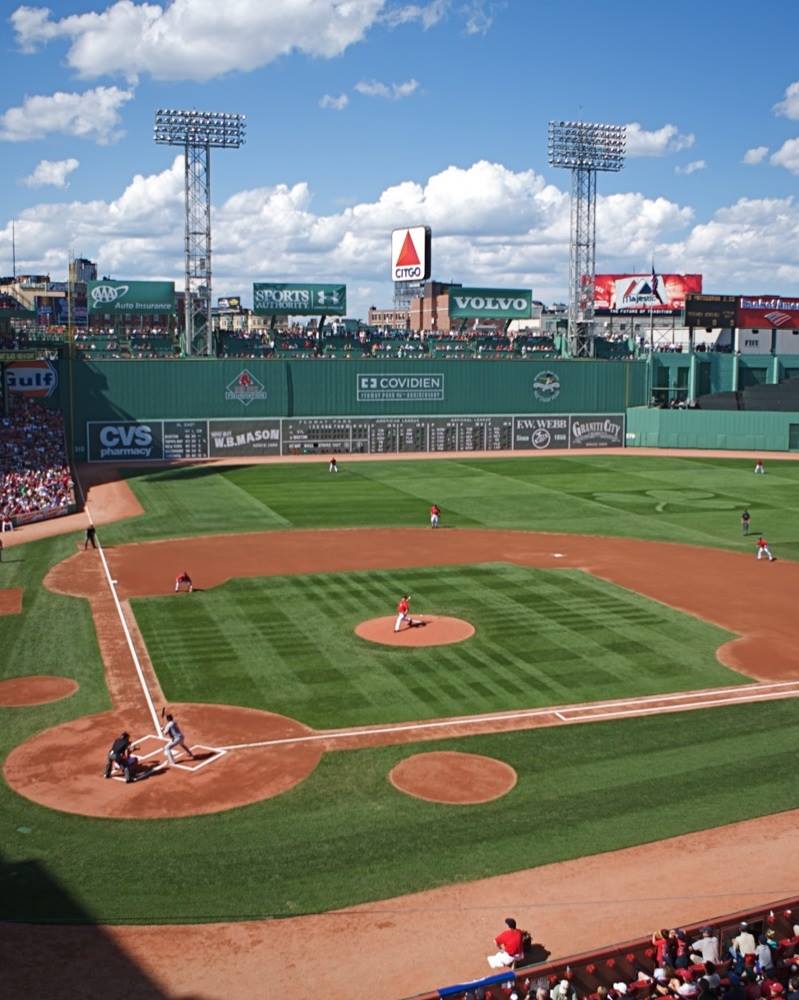
The funny part is the inclusion of Wrigley and Fenway in the ESPN poll. From 2000 to 2002, the Cubs and their opponents hit 15 more homers on the road than at Wrigley. During the same span, the Red Sox and their opponents were also much more prolific on the road, to the tune of 83 more dingers. Fenway is a great doubles park, but it hasn't been a great homerun park since the mid-1980s, and it has no business being in this poll.

It's way too early to tell about Great American Ball Park in Cincinnati, but the April data don't make it look like homer heaven. The Reds and their opponents hit 41 homers there and 39 on the road in April, but after you adjust for a significantly higher number of atbats at home, the rate was lower there than on the road. But I repeat ... it's way too early to tell.

For the record, the five worst homer parks over the past three years have been Pacific Bell Park -209, Comerica Park -184, Safeco Field -110, Qualcomm Stadium -91, and the Metrodome -85.

By the way, I know that it would have been more accurate to run these numbers on a per-AB basis. But that wouldn't have changed the rankings much, and sometimes it can be easier to grasp the impact when you're looking at the raw totals. Besides, my main point is that ESPN.com wasn't even close when they chose the five parks for their poll.

posted by Tom at 2:06 PM