


![]() |
![]() |
Thoughts from Diamond Mind
Welcome to the Diamond Mind weblog. For a while, we've been looking for the best way to publish small pieces of baseball commentary and research, items that may not warrant a full article (such as the ones we've been writing for ESPN.com since 1998) or items that would be outdated by the time our next email newsletter is due to be issued. A weblog seems perfectly suited to this purpose, and we hope you enjoy what you read here. To provide feedback, email us at blog@diamond-mind.com.
We won't be able to reply to those messages individually, but we'll read them all,
and we may respond by posting a reply in the weblog itself.
|
|
Blog Archives Weblog Home |
Friday, June 20, 2003
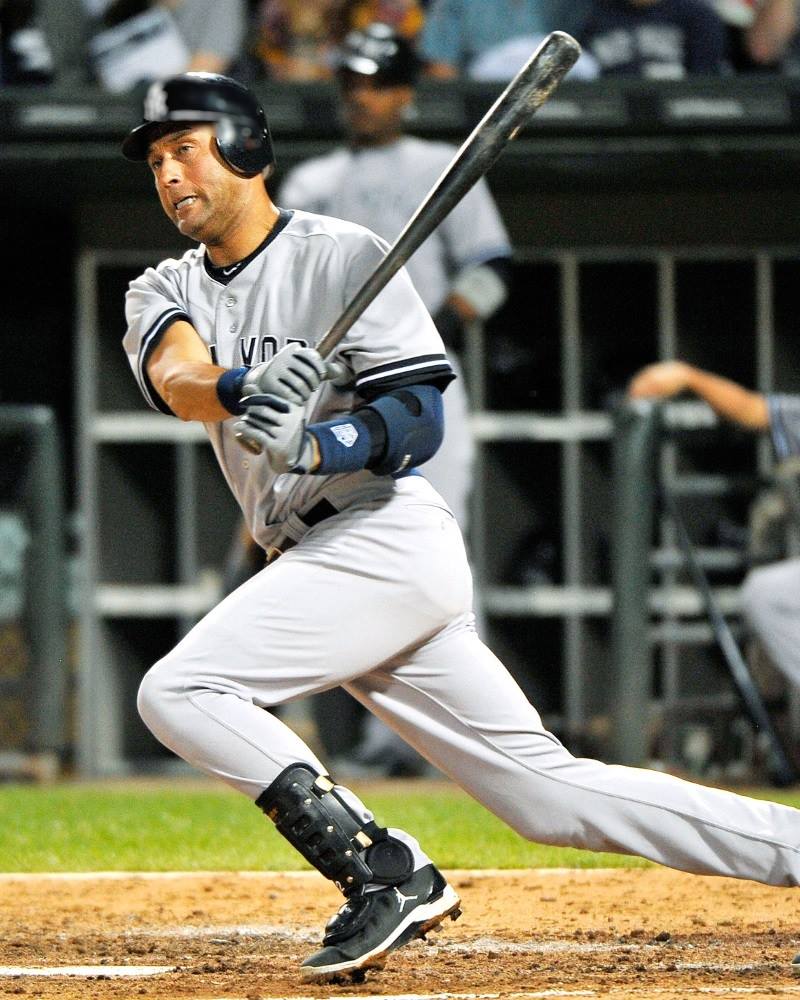
History in the making? Heading into last night's game, the Dodgers were tied for the lead in the NL West even though they were last in the league in scoring with only 254 runs in 70 games. And they're not all that close to climbing out of the basement, either. San Diego is 15th with 299 runs, albeit in three more games. The combination of the Dodgers lofty perch in the standings and their woeful offensive ranking got me wondering about whether a team has ever won a division or pennant while finishing last in the league in scoring. It has never happened, though there have been a few winners who ranked near the bottom in scoring: - the 1916 Red Sox, 1924 Senators, and 1959 White Sox were 6th in scoring in an 8-team league - the 1965 and 1966 Dodgers were 8th in scoring in a 10-team league - the 1973 Mets won their division despite being last in the division in runs and 11th out of 12 NL teams in scoring; this wasn't a very good team, though, as its final 82-79 record indicates - the 1984 Royals tied for 5th in scoring in their 7-team division and tied for 12th among all 14 AL teams; like the Mets, this was a mediocre team that was able to win a weak division with a record (84-78) only a little above .500 - the 1985 Royals were 13th in the AL in runs but rode some great young arms to a World Series championship - two other teams, the 1995 Dodgers and the 2002 Athletics, were outscored by all of their divisional foes, but neither team was in the bottom quarter of the league overall, so these results aren't really comparable to the others In fact, winning a pennant or division usually means scoring a lot of runs. More than half of the pennant winners through 1968 led the league in scoring, and more than half of the division winners since 1969 led their division in scoring. Before the season started, we projected the Dodgers for only 82 wins because we didn't expect them to be able to score. They're winning because the pitching has been a lot better than we expected -- and we expected it to be very good -- and they're winning a good (but not exceptional) percentage of their close games. Still, if they don't get their offense in gear soon, they'll have a lot of trouble staying in the race. If they do finish last in scoring and somehow manage to win the division anyway, they'll make history. posted by Tom at 12:43 PM Wednesday, June 18, 2003 Second thoughts? In a recent newsletter, ESPN.com's John Sickels talked about a "shadow" roster he maintains for his favorite team, the Minnesota Twins. Each year, John makes his own selections in the June draft and then tracks their progress in the coming years. I mention this because he wrote that Todd Walker is still on that roster. Walker made his debut with the Twins but was traded to Colorado in 2000, but John chose not to make the same deal for his shadow Twins. That got me thinking about how the Twins could use a #2 hitter like Walker, who's a good bet to contribute a .350 OBP with a little power and can handle his defensive duties. Rivas, on the other hand, has struggled both offensively and defensively during the time that Walker has been a starter for Colorado, Cincinnati, and Boston. Both players are having seasons that are in line with their career averages. The arguments for Rivas, of course, are the potential for this 23-year-old to develop and the fact that he's about $3m a year cheaper than Walker. If the Twins hadn't suddenly become serious contenders, it would be a lot easier to be patient with a young player like Rivas. But they are serious contenders, and his .311 OBP and .347 SPC aren't cutting it. Down on the farm, Michael Cuddyer is batting .364 with a .476 OBP. Cuddyer isn't a second baseman, but they're trying him out at that position to see if he can handle it. He was drafted as a shortstop and has played third base and the outfield, so there's a good chance that he can. If so, Rivas might be running out of time. posted by Tom at 8:58 PM Tuesday, June 17, 2003 Reed Johnson's bookends On Sunday, Toronto's Reed Johnson led off the bottom of the first with a homerun, then won the game with another homer in the tenth. I asked Dave Vincent, keeper of the SABR homerun database, how often a player has started and ended a game with a homer. It's been done four times, first by Philadelphia's Sliding Billy Hamilton in 1893. Hamilton's feat was unique until it was matched sixty-four years later by Vic Power of the Kansas City Athletics. Anaheim's Darin Erstad made it three in June of 2000. For those of you who are keeping score at home, that's one in the 1800s, one in the 1900s, and two (and counting) in the 2000s. Many thanks to Dave Vincent for his quick response to my query. posted by Tom at 9:15 AM Monday, June 16, 2003 Following up On May 8th, I noted that the Cubs had been using Mark Grudzielanek and Alex Gonzalez at the top of the batting order. Both were hot to begin the season, and both had cooled off as of that writing. Grudzielanek got hot again and then cooled off for the second time, and his OBP currently sits at .331, seven points above his career mark. Gonzalez is now batting .254 with a .311 OBP, and both marks are a few points above his career averages. In other words, both players are doing what they usually do, and Chicago still hasn't found the table-setters they need. On May 10th, the Rockies were 17-19 and facing a rough couple of weeks. I wrote that if they could survive that stretch, their schedule would ease considerably, and they might be able to make a run at the postseason. Since then, Colorado is 18-16, bringing their overall record to 35-35, and six games out in the wildcard race. They don't strike me as a team that's ready to go on a tear, but they're not out of it, either. When Jeff Torborg was fired as manager of the Marlins, his club was at 16-22, thanks in part to a very tough schedule and a series of injuries to their top starting pitchers. Since Jack McKeon took over, Florida is 18-15 and has outscored its opponents by 31 runs. A big part of the story is Dontrelle Willis, a 21-year-old rookie who has gone 6-1 with a 2.66 ERA since making his big-league debut on May 9th. But that's not the whole story, as the offense has scored 4.9 runs per game under McKeon, a little more than half a run better than during Torborg's tenure. In mid-May, the White Sox fired Gary Ward as hitting coach and replaced him with Greg Walker. Since then, scoring is down a tenth of a run per game, Konerko still isn't hitting, Crede has looked a bit better but hasn't busted out in a big way, and the team has gone 12-14. At the end of May, Javier Vazquez was quoted as saying that he wanted to cut down on his strikeouts so he could go deeper into games. It hasn't worked. In four starts since then, his Ks are down from 11 to 9 per nine innings, but his walks are up from one every six innings to one every two innings and his ERA has been 5.40. Two readers of this blog wrote to us with rather harsh assessments of the defensive play of Cincinnati's shortstop, Felipe Lopez. Most of their criticism was directed at the mental side of his game, though the 16 errors were mentioned, too. Lopez wasn't hitting, either, and was just sent down to AAA to work on his stroke and his defense. posted by Tom at 10:40 PM Yankee defense From reader John Maier: I'd like to thank you for your insightful commentary. It's really a breath of fresh air to read accurate assessments about baseball. I don't understand some of the comments that the ESPN broadcasters will make or write.Interesting that John should write about this, because I've been thinking the same thing. Not long ago, I heard Joe Morgan go over the starting Yankee defense for a game. I agreed with most of his comments until he said the defense will be even better when Bernie Williams is back in center field. We've done our defense analysis for the first two months of the season, and while I don't like to put too much stock in the results from anything less than a full season, our analysis confirms John's view. Matsui has looked above average in both left and center, and better in center (his position in Japan) than in left. Through 1997, when he turned 27, Williams was a much better than average center fielder, but since 1996, he has been in the middle of the pack or slightly below. I was thinking the other day that Joe Torre would be wise to put Bernie in left and leave Matsui in center when Bernie comes back from his injury. While I'm on the subject of Yankee defense, let's talk about Derek Jeter. It has been fashionable to bash Jeter for his horrible zone ratings and range factors in recent years. I've pointed out the flaws in those stats on many occasions, and have come to Jeter's defense more than once because of those flaws. But my defense of his performance has been limited. I've never said he's a good defensive player or an asset to his team. I've simply pointed out that he has been blessed with a pair of high quality 3Bs, Scott Brosius and Robin Ventura, so he's been denied the chance to make some plays because the other guys got there first. In other words, Jeter hasn't been quite as bad as the raw numbers have suggested. But that's not to say that he's been good, either. And so far in 2003, it appears that his decline is continuing. He currently ranks dead last in the majors in our own shortstop rankings, and he's dead last in range factor and zone rating among shortstops with at least 250 innings in the field. Even if he's still losing some chances to Ventura, there's no way you can argue that he's helping the team defensively. Bernie Williams is an asset to the Yankees because he's a terrific hitter who can still hold his own at a demanding defensive position, but I believe New York's defense would be better with Williams in left and Matsui in center. In the past, Jeter has had an above-average bat for a middle infielder, though even that part of his game has been sliding for several years, and his OPS is only .719 so far in 2003. He has become a defensive liability, and the combined package is hurting the team right now. I'm not saying they need to find another shortstop, because Jeter may still be suffering the after-effects of a serious shoulder injury and could begin to rebound, both offensively and defensively, at any time. But he is one of the reasons they're not running away with the division right now. posted by Tom at 11:56 AM |
![]() |